As the European Commission prepares to unveil its first-ever EU Sustainable Tourism Strategy in October 2026, the Council of the European Union, representing Member States, just published its contribution recognising tourism’s economic vital role, and highlighting its need for a sustainable transition. The Council Conclusions “Building a sustainable and competitive tourism for the future” adopted on 28 May 2026 outline a comprehensive vision for Europe’s tourism ecosystem. Cycling tourism emerges as one of the clearest examples of how these ambitions can be translated into practice but was mentioned only once in these Conclusions. ECF urges EU institutions to recognise cycling tourism’s greater contribution to the sustainable and competitive tourism of tomorrow.
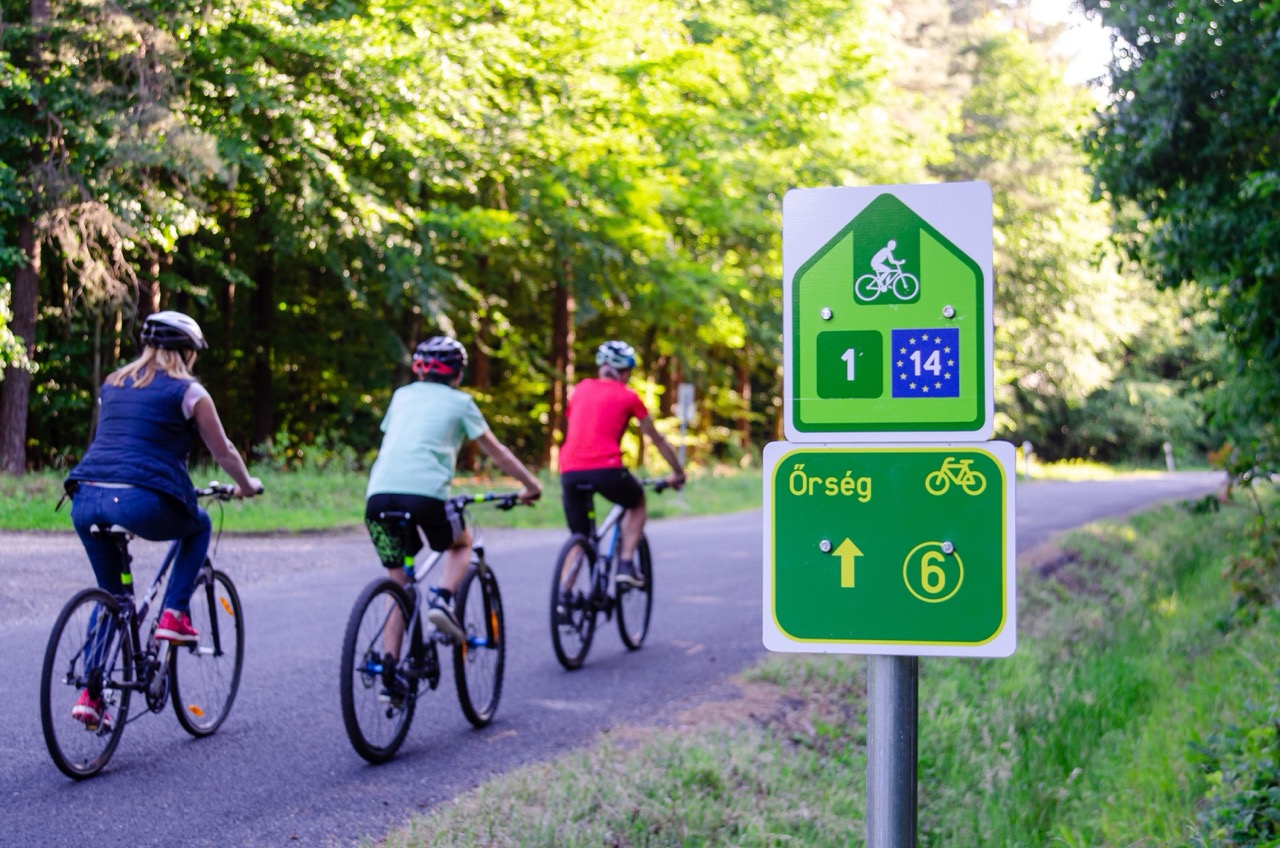
EuroVelo 14 signing along Őrség National Park in Hungary
Cycling in the Conclusions of the Council of the European Union on tourism 2026
Cycling is explicitly mentioned once in the 18 pages of Conclusions of the Council on tourism, in the chapter dedicated to connectivity and sustainable mobility. The Council encourages Member States to "promote sustainable, multimodal and cross-border connectivity links for tourism, including rail, buses, ferries and other forms of public transport, as well as cycling, including last-mile solutions within destinations, including towards remote rural areas". The importance of sustainable and multimodal mobility solutions is also highlighted and can include cycling as well. This is a recognition of cycling as a relevant mode of transport for tourism-related mobility that ECF celebrates, but this is not only the responsibility of Member States.
Another chapter highlights the need to improve local communities and social equity through tourism, by encouraging Member States to “support the diversification of tourism products, further enhancing the resilience of local tourism value and supply chains”. Cycling tourism is a perfect fit here, as well as possibilities “that could facilitate residents’ access to sports, cultural and other recreational services offered in destinations”, that the Council invites the Commission to explore.
On green transition and climate change, the Conclusions stress “that accelerating mitigation and adaptation action (...) are indispensable (...) including through further attention on a shift towards more regenerative tourism approaches that benefit nature and destinations" and invite Member States to "strengthen climate change mitigation and adaptation in tourism policies that best contribute to economic, social and environmental sustainability, by (...) promoting tourism products and nature-based solutions that are more resilient to the impacts of climate change". Despite clear reference to cycling tourism, this statement clearly aligns with ECF’s efforts to promote alternative forms of tourism and sustainable tourism behaviours benefitting the environment and local communities.
In general, the Conclusions insist on the multi-level governance of tourism, the shared responsibilities in the sector, but also call to avoid complexity and overlaps between already existing policy tools. Tourism is a shared competency and falls under the subsidiarity principle. That being said, the European Declaration on Cycling refers briefly to cycling tourism under Chapter VII, and the EU Sustainable Tourism Strategy is a clear opportunity to support the implementation as far as cycling tourism is concerned.
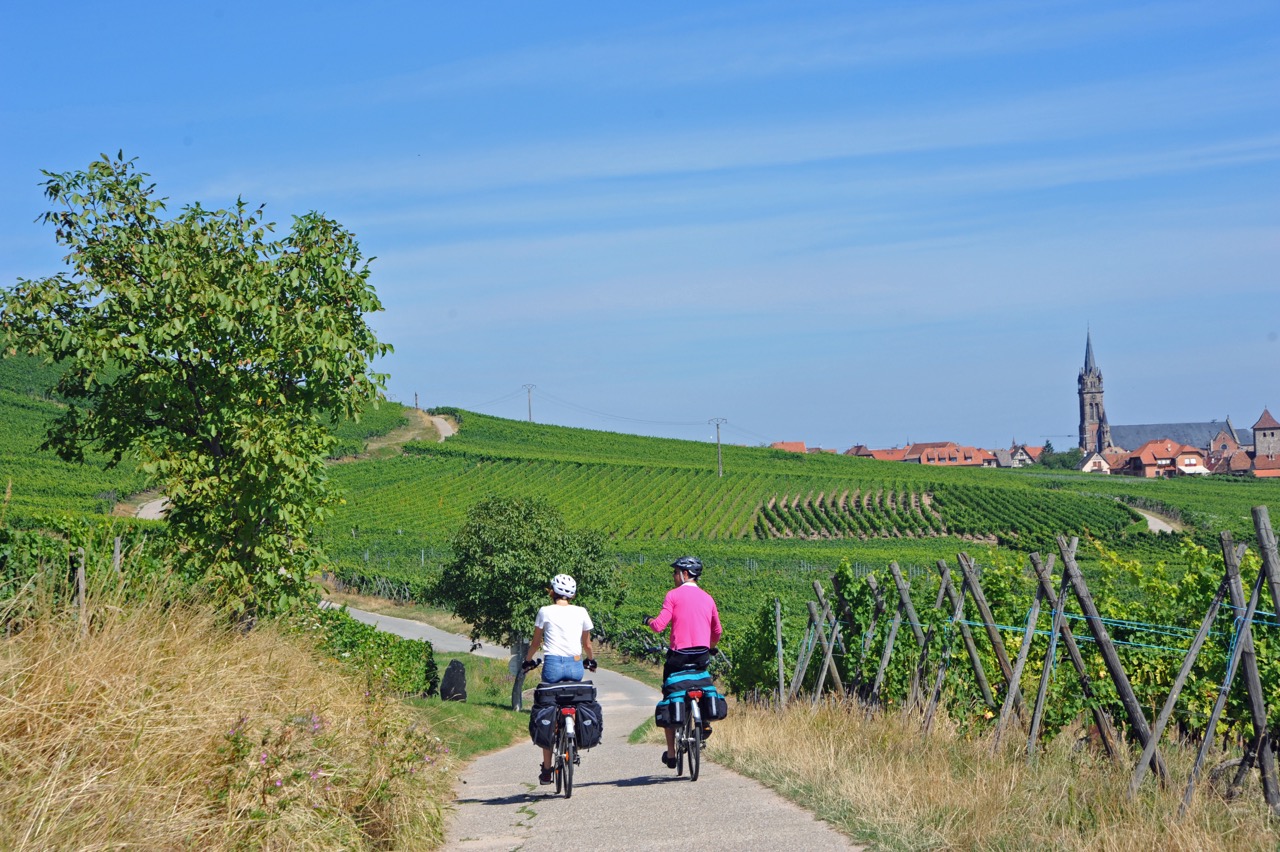
Cyclists on EuroVelo 5 Via Romea Francigena Véloroute du vignoble © C.FLEITH 245- ADT
Next steps: the EU Sustainable Tourism Strategy and cycling
The European Commission announced that the EU Sustainable Tourism Strategy will be published in October 2026. ECF has been contributing to multiple discussions on the topic since 2025 and has submitted concrete proposals to the European Commission to explicitly reference cycling and active tourism in the Strategy, including in the dedicated consultation. This is also the ambition of the Active Tourism Coalition launched in January 2026 by ECF.
During the EU Youth Dialogue on tourism organised by Commissioner Tzitzikostas in May 2026, our friends from the European Greenways Association asked the Commission about cycling and EuroVelo and his reply was very encouraging: “we have a particular chapter in our Strategy that has to do with cycling” (...). “Cycling is one of the best modes of transport in my view” (...). "Cycling is a big part of tourism", and “we are looking forward to collaborating with initiatives such as yours, because it is important to try to link, what I asked our people in Brussels is to find ways if we can link cycling adventures and paths throughout Europe”.
EuroVelo, the European Cycle Route Network a well recognised success story, but also the collaboration within the Active Tourism Coalition are perfect ways to start establishing an Active Europe brand promoting cycle routes, hiking trails, greenways, mountain bike trails, and any other type of low-carbon itineraries crossing European destinations. ECF stands alongside the European Commission to contribute to a more competitive and sustainable tourism with cycling and active tourism at its core, such as we did with the European Parliament recently again.
Velo-city Rimini 16-19 June 2026 but also the EuroVelo & Cycling Tourism Conference Utrecht 30 September-2 October 2026 will be ideal events to continue the discussion around cycling in the current political agenda.
Header Image Credits: Cyclists in Stein am Rhein © Switzerland Tourism - Christian Meixner
EuroVelo 14 signing along Őrség National Park in Hungary
Cycling in the Conclusions of the Council of the European Union on tourism 2026
Cycling is explicitly mentioned once in the 18 pages of Conclusions of the Council on tourism, in the chapter dedicated to connectivity and sustainable mobility. The Council encourages Member States to "promote sustainable, multimodal and cross-border connectivity links for tourism, including rail, buses, ferries and other forms of public transport, as well as cycling, including last-mile solutions within destinations, including towards remote rural areas". The importance of sustainable and multimodal mobility solutions is also highlighted and can include cycling as well. This is a recognition of cycling as a relevant mode of transport for tourism-related mobility that ECF celebrates, but this is not only the responsibility of Member States.
Another chapter highlights the need to improve local communities and social equity through tourism, by encouraging Member States to “support the diversification of tourism products, further enhancing the resilience of local tourism value and supply chains”. Cycling tourism is a perfect fit here, as well as possibilities “that could facilitate residents’ access to sports, cultural and other recreational services offered in destinations”, that the Council invites the Commission to explore.
On green transition and climate change, the Conclusions stress “that accelerating mitigation and adaptation action (...) are indispensable (...) including through further attention on a shift towards more regenerative tourism approaches that benefit nature and destinations" and invite Member States to "strengthen climate change mitigation and adaptation in tourism policies that best contribute to economic, social and environmental sustainability, by (...) promoting tourism products and nature-based solutions that are more resilient to the impacts of climate change". Despite clear reference to cycling tourism, this statement clearly aligns with ECF’s efforts to promote alternative forms of tourism and sustainable tourism behaviours benefitting the environment and local communities.
In general, the Conclusions insist on the multi-level governance of tourism, the shared responsibilities in the sector, but also call to avoid complexity and overlaps between already existing policy tools. Tourism is a shared competency and falls under the subsidiarity principle. That being said, the European Declaration on Cycling refers briefly to cycling tourism under Chapter VII, and the EU Sustainable Tourism Strategy is a clear opportunity to support the implementation as far as cycling tourism is concerned.
Cyclists on EuroVelo 5 Via Romea Francigena Véloroute du vignoble © C.FLEITH 245- ADT
Next steps: the EU Sustainable Tourism Strategy and cycling
The European Commission announced that the EU Sustainable Tourism Strategy will be published in October 2026. ECF has been contributing to multiple discussions on the topic since 2025 and has submitted concrete proposals to the European Commission to explicitly reference cycling and active tourism in the Strategy, including in the dedicated consultation. This is also the ambition of the Active Tourism Coalition launched in January 2026 by ECF.
During the EU Youth Dialogue on tourism organised by Commissioner Tzitzikostas in May 2026, our friends from the European Greenways Association asked the Commission about cycling and EuroVelo and his reply was very encouraging: “we have a particular chapter in our Strategy that has to do with cycling” (...). “Cycling is one of the best modes of transport in my view” (...). "Cycling is a big part of tourism", and “we are looking forward to collaborating with initiatives such as yours, because it is important to try to link, what I asked our people in Brussels is to find ways if we can link cycling adventures and paths throughout Europe”.
EuroVelo, the European Cycle Route Network a well recognised success story, but also the collaboration within the Active Tourism Coalition are perfect ways to start establishing an Active Europe brand promoting cycle routes, hiking trails, greenways, mountain bike trails, and any other type of low-carbon itineraries crossing European destinations. ECF stands alongside the European Commission to contribute to a more competitive and sustainable tourism with cycling and active tourism at its core, such as we did with the European Parliament recently again.
Velo-city Rimini 16-19 June 2026 but also the EuroVelo & Cycling Tourism Conference Utrecht 30 September-2 October 2026 will be ideal events to continue the discussion around cycling in the current political agenda.
Header Image Credits: Cyclists in Stein am Rhein © Switzerland Tourism - Christian Meixner


