As a Cities & Regions for Cyclists (CRC) Network member, Taipei City places cycling at the heart of its daily mobility strategy. As the most densely populated city in Taiwan, Taipei works to maximise limited urban space while balancing pedestrian safety and cycling accessibility for over 2.5 million residents. We spoke with Chin Ting Yang, Senior Specialist at Taipei City’s Department of Transportation, to learn more about the city’s work to develop cycling.
“Taipei City sees cycling as an integral part of daily urban mobility. By developing an extensive cycling network, integrating public bicycle systems with public transport, and continuously improving safety and accessibility, Taipei aims to build a convenient, sustainable, and people-centred green transport environment.”
Taipei’s progress on cycling is closely tied to its transition toward greener mobility. As of 2024, 63% of all trips were made by green transport, with a target of 70% by 2030. Within that mix, public transport remains the backbone, representing 38.3% of the modal share, while nonmotorised travel accounts for 24.7%. This combination remains dominated by walking (20.8%) but is increasingly supported by cycling, which reached 3.9% of trips.
This rise is the result of Taipei’s consistent efforts to expand and improve cycling infrastructure. By March 2026, the city had developed 534.82 km of cycling infrastructure, including 362.30 km of shared pedestrian-cycling paths, 60.52% of separated bicycle lanes and 112km of riverside cycling routes. The city’s investment strategy reinforces this trajectory. For FY2026, Taipei allocated NTD 584 million (around €16 million) to cycling-related measures that lower barriers to riding and encourage multimodal travel. As a result, subsidies for public bicycle usage fees, public transport transfer discounts, and sustained promotion and awareness programmes all work together to turn cycling into an attractive mobility choice for residents.
Today, Taipei City’s main priority is to support more sustainable mobility habits by incorporating cycling into everyday travel. This objective has already come to life through the city’s most significant cycling achievement: the YouBike public bicycle system. Over the years, YouBike has grown into a cornerstone of daily urban mobility, transforming cycling from a leisure activity into part of everyday urban commuting. However, this success was not without its difficulties. One challenge Taipei encountered was the limited space available for expanding bicycle docking stations in densely developed urban areas. To address this issue, Chin Ting Yang explained how Taipei introduced the YouBike 2.0 system:
“[The YouBike 2.0 system] features a more flexible one-bike-one-dock design. As the power system is primarily integrated into the bicycles themselves, stations do not require a direct connection to the electricity grid. This significantly reduces installation space requirements and enables stations to be deployed in a wider variety of locations, thereby improving both service coverage and accessibility.”
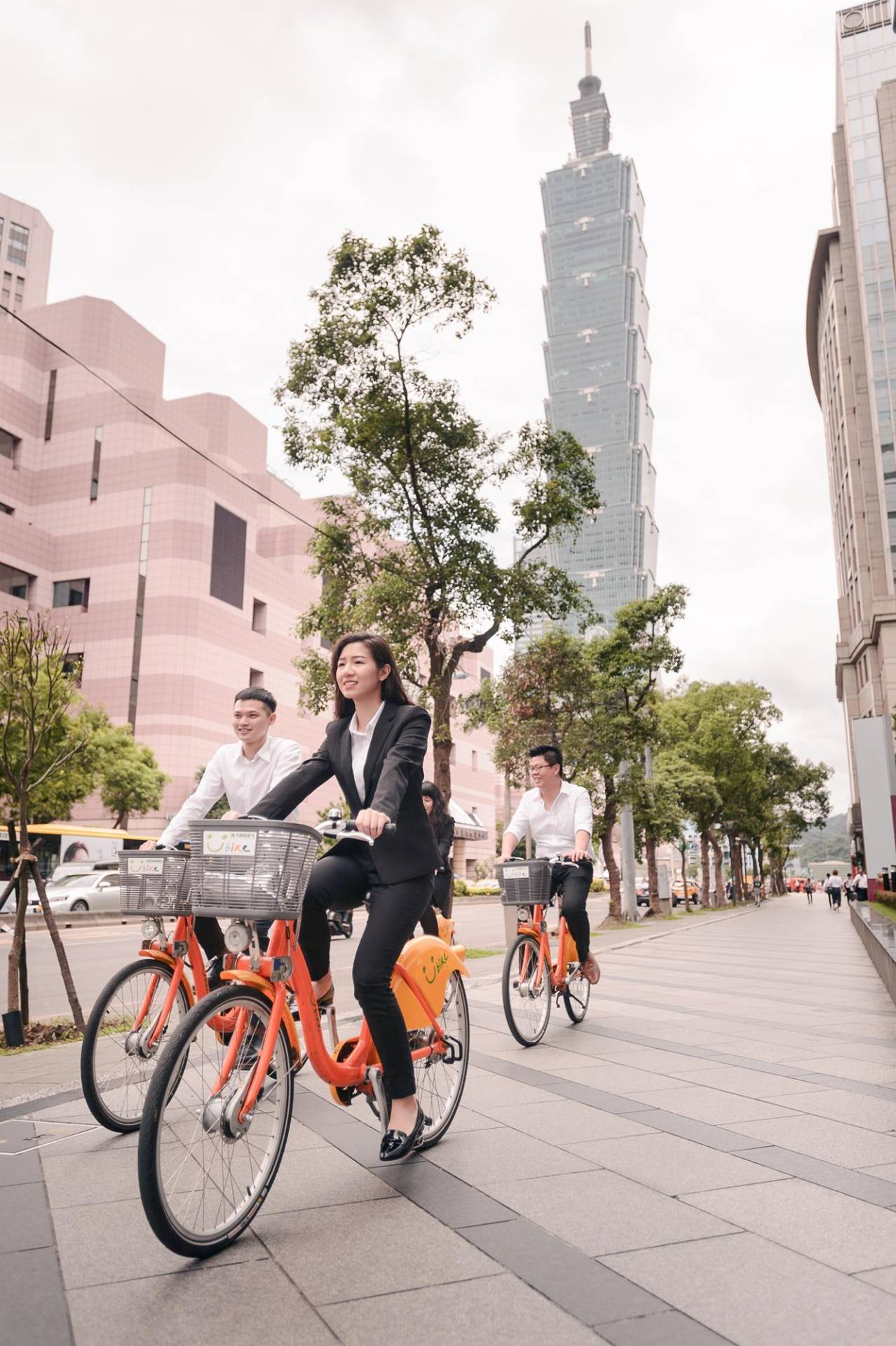
YouBike riding in Taipei
Photo credit: Taipei City
The need for YouBike 2.0 also became increasingly clear as the original system’s success surpassed expectations with rising ridership creating concentrated demand patterns. This challenge highlighted the need for a more flexible, space-efficient system. To address it, Taipei City has introduced new approaches to bicycle redistribution and network management alongside YouBike 2.0, combining infrastructure improvements with operational measures to keep bicycles available where they are needed most. These initiatives have strengthened the reliability of the system while offering practical lessons for other cities looking to develop their public bicycle networks.
“Taipei increased operational resources by deploying additional dispatch personnel and vehicles, as well as increasing the frequency of bicycle redistribution. The city also introduced the ‘Friendly Relay’ incentive programme, which rewards users with free ride vouchers for helping rebalance the system by returning bicycles to empty stations and borrowing bicycles from full stations. These efforts help improve bicycle distribution efficiency across the network and ensure a more stable level of bicycle availability at all stations.”
Ultimately, YouBike's success is the result of several complementary elements. With its dense station network every 150–200 metres, the support of a strong public-private collaboration combining government policy support with professional private-sector operations, and a high bicycle turnover, the system is both accessible and efficient. In addition to these foundations the city government has implemented targeted, relatively low-cost measures, including subsidies for free rides for the first 30 minutes and measures to improve rider safety, such as enhanced injury insurance and a violation point system. Together, these elements have made YouBike a reliable, affordable, and widely used public bicycle system.
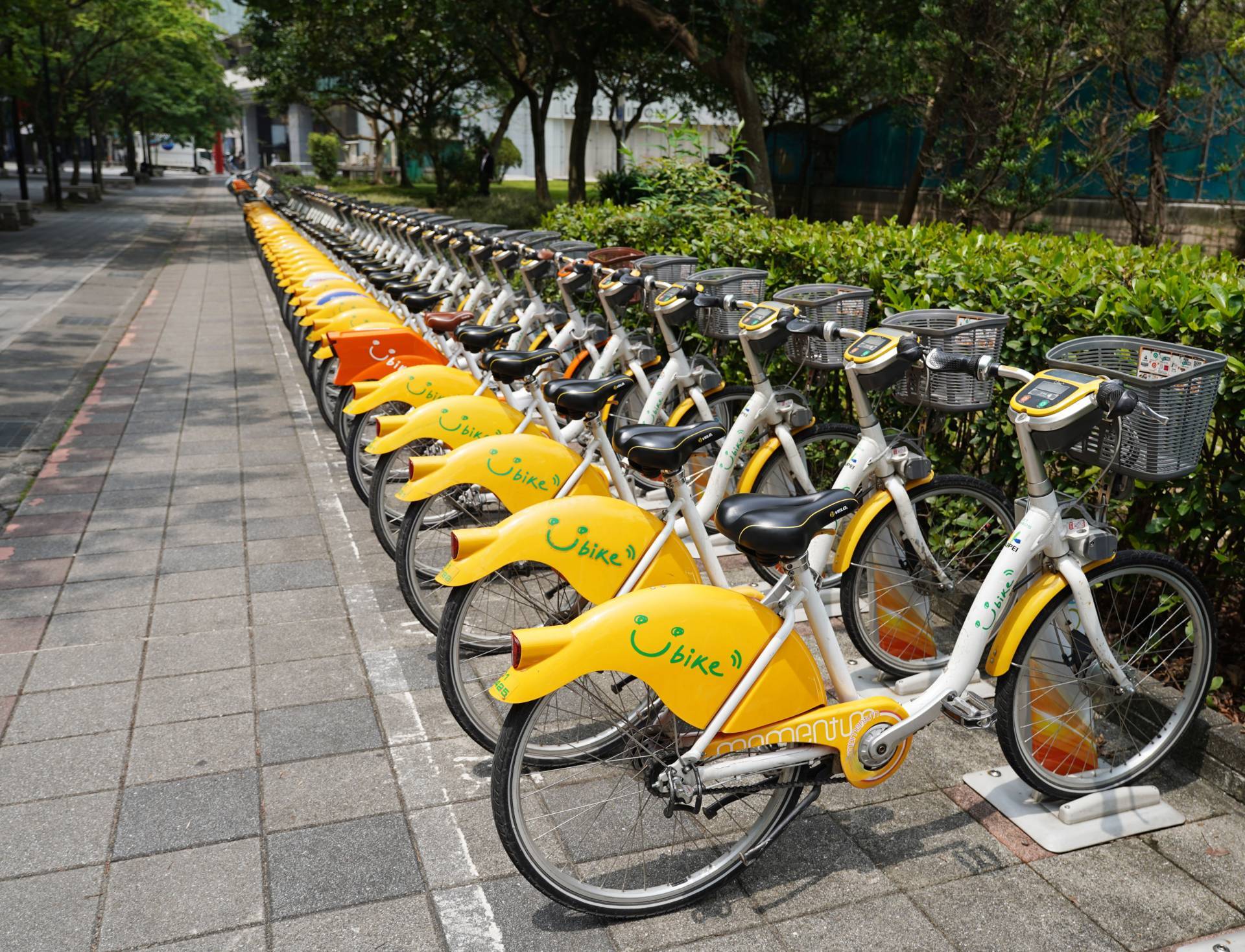
YouBike 2.0 station
Photo credit: Taipei City
But another key factor behind YouBike's popularity is its seamless integration with Taipei's wider public transport network. Designed to address first- and last-mile travel, the system connects closely with the Metro Rapid Transit (MRT) stations and bus services, enabling quick commutes made even more convenient by the implementation of transfer discounts between public bicycles and public transport. As Taipei continues to strengthen its shared mobility environment, the introduction of YouBike 2.0E electric-assisted bicycles has further expanded access by making longer journeys easier and cycling more attractive to a wider range of users. These measures have strengthened public transport use while expanding multimodal mobility options across the city. As Chin Ting Yang sums up:
“By expanding station accessibility and improving cycling infrastructure, Taipei encourages local communities to incorporate cycling into everyday travel and supports more sustainable mobility habits.”
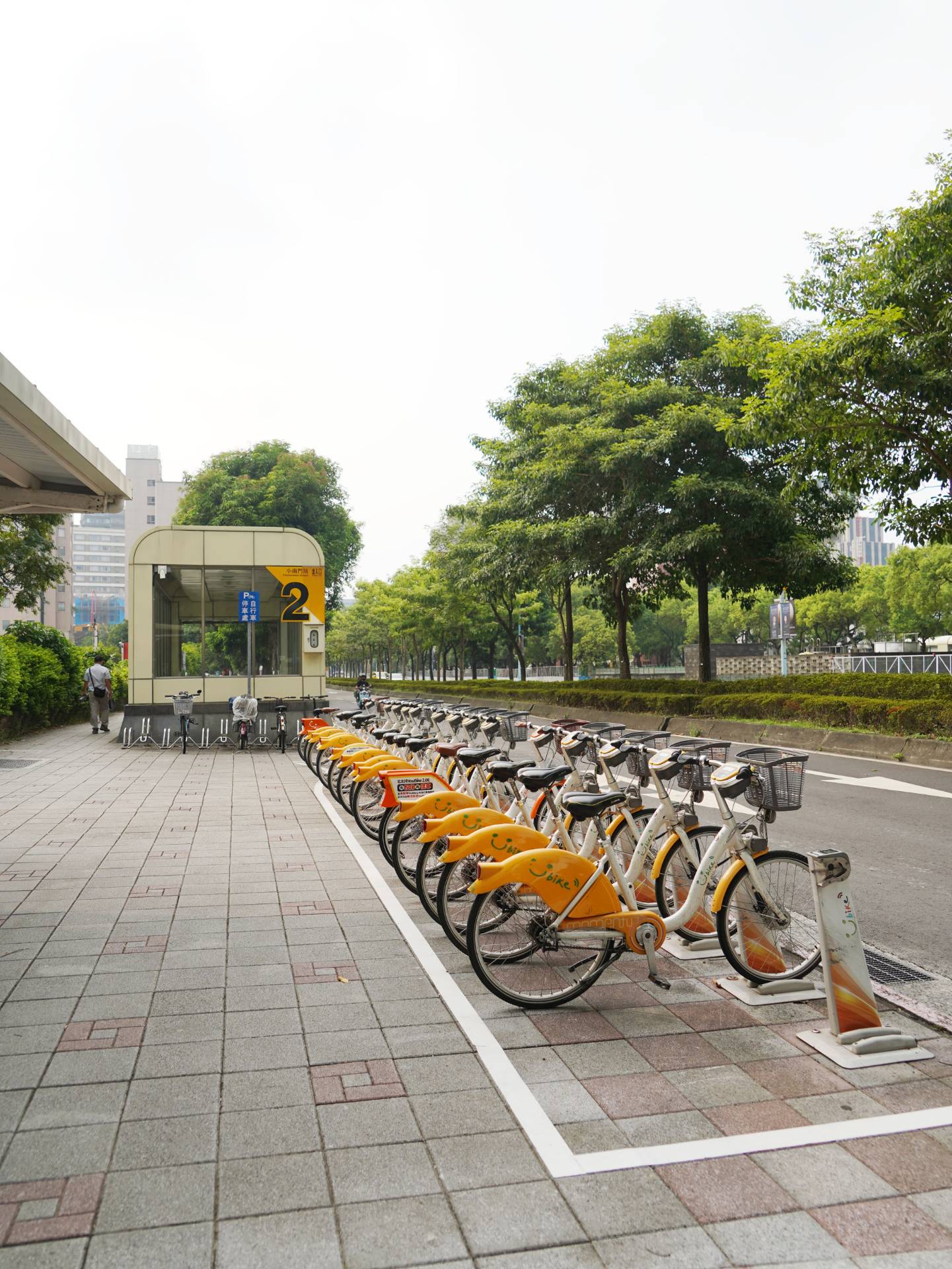
YouBike 2.0 station near an MRT entrance.
Photo credit: Taipei City
Taipei City's approach has also been shaped by a willingness to learn from international best practices while adapting them to local conditions. The city has refined its cycling infrastructure to make better use of limited urban space and accommodate different street environments.
“Taipei has drawn inspiration from Japan’s approach to shared pedestrian and cycling spaces. Based on local sidewalk conditions, Taipei has adopted a flexible design approach, allowing sidewalks with a clear width of 2–3 metres to be designated as shared pedestrian–cycling spaces, while sidewalks wider than 3 metres may include dedicated bicycle-priority lanes. Where conditions do not permit shared use, cyclists are required to ride on the roadway and keep to the right.”
Cycling has thus become an integral part of Taipei City’s broader climate strategy. Through the Taipei Net Zero Emissions Management Autonomous Ordinance, the city is working to reduce greenhouse gas emissions, strengthen urban resilience, and advance towards its net-zero goals. Within this framework, the public bicycle system plays a key role in enabling low-carbon mobility and supporting long-term urban transformation. As a result, Taipei has emerged as a leading example of how integrated public bicycle schemes can contribute to wider environmental goals. As Chin Ting Yang concludes:
“Through a high-density station network, seamless integration with the MRT system, and the recent upgrade to YouBike 2.0, Taipei has significantly improved short-distance mobility and effectively addressed first- and last-mile connectivity challenges.”
For more information on Cities & Regions for Cyclists, click here.
For more information on Taipei City, click here.


