Launched in April by the Cities for Better Health initiative (Novo Nordisk) together with the European Cyclists’ Federation (ECF), the Healthy Cycling Challenge invited cities and communities to reimagine how to leverage cycling as an active mode of transport, and as a tool for promoting public health, environmental sustainability and social equity in urban neighbourhoods. Over 240 applications have been received from across more than 45 countries! We are now pleased to unveil the six ambitious initiatives that have been shortlisted for the final phase of the challenge, with three winners to be announced in October!
The overwhelming response exceeded our wildest expectations. In just six weeks, the challenge drew 243 inspiring proposals from 46 countries across all five continents. After a thorough evaluation, six finalists have been selected to proceed to the second round. The six selected projects span Latin America, East Africa and South Asia. They are all grounded in local realities, promoting cycling as a safe, inclusive and joyful solution to local challenges:
Community bike-sharing in São Paulo, Brazil
Lead organisation: Instituto Caminhabilidade, Brazil
Pedalando Juntas is a resident-led bike-sharing system in the Peinha community of São Paulo, offering free, short-term bike loans to promote mobility and connection, especially for women and children accessing the nearby Pinheiros River park.
Biking school bus in Kinigi, Rwanda
Lead organisation: Healthy People Rwanda
Ntwara Ndebe is a safe biking school bus programme developed in collaboration with Berwa Cycle Tours and Lane Patrol, where groups of children cycle to school together along supervised routes, promoting daily movement and equitable school transport in rural Rwanda.
Integrated Cycling Corridor in Gurugram, Haryana, India
Lead organisation: Raahgiri Foundation
Pedal Path is a community-driven integrated cycling corridor developed along HIPA Road in Gurugram, India, aiming to enhance safety, convenience, and accessibility for daily cyclists, while putting equitable mobility at the heart of urban health and inclusiveness.

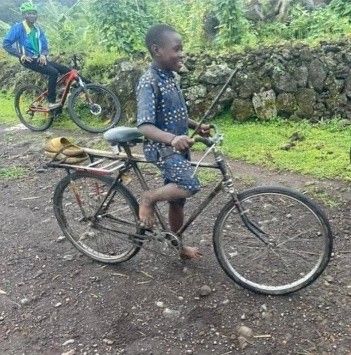

Caption: From left to right: Pedalando Juntas (Brazil), Ntwara Ndebe (Rwanda), Pedal Path (India)
Urban cycling reform in Lima, Tacna and Trujillo, Peru
Lead organisation: Peruvian Society for Environmental Law
Pedalea Seguro is strengthening urban cycling in three Peruvian cities by mapping cycling infrastructure to design digital dashboards, installing tactical urbanism interventions with youth cyclist activists, analyzing urban mobility policy to suggest improvements, and strengthening the leadership and capacity of urban youth collectives
Jinja Reimagined in Jinja, Uganda
Lead organisation: Cycling out of Poverty Africa (CooP-Africa)
Jinja Reimagined is creating people-friendly streets in underserved neighbourhoods of Jinja by redesigning road space to prioritise cycling, walking, and safe access for all and turning everyday routes into healthier, more inclusive public spaces.
Pedal Paathshala (School): Community Learning on Wheels
Lead organisation: Cycle City Network Nepal (CCNN)
Pedal Paathshala brings education and cycling together through school based bicycle library, engaging students, women, teachers and community members across Chitwan to build a culture of active mobility, road safety and environmental awareness.
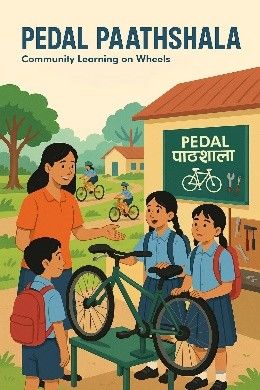
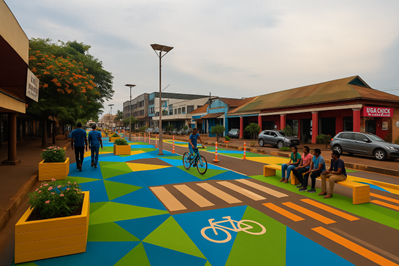

Caption: From right to left: Pedal Paathshala (Nepal), Jinja Reimagined (Uganda), Pedalea Seguro (Peru)
What’s next
Each finalist receives tailored support to strengthen their implementation plans, budgets, and monitoring frameworks before the final selection. The three winning projects will be announced in October and featured in a City Health Talk webinar in December, offering city leaders and community changemakers worldwide a glimpse into what’s possible when cycling is made safe, inclusive and accessible. The three winning projects will present their implementation progress and results in June at Velo-city 2026 Rimini.


